
A floor for a new garage
When you're building a garage, we pour the slab it sits on and plan the joints and finish with you, so the floor is ready for a car and whatever else ends up in there.
Flaking, pitted or cracked garage floor? We'll tell you whether it can be fixed or needs a new slab mixed for New Hampshire winters.
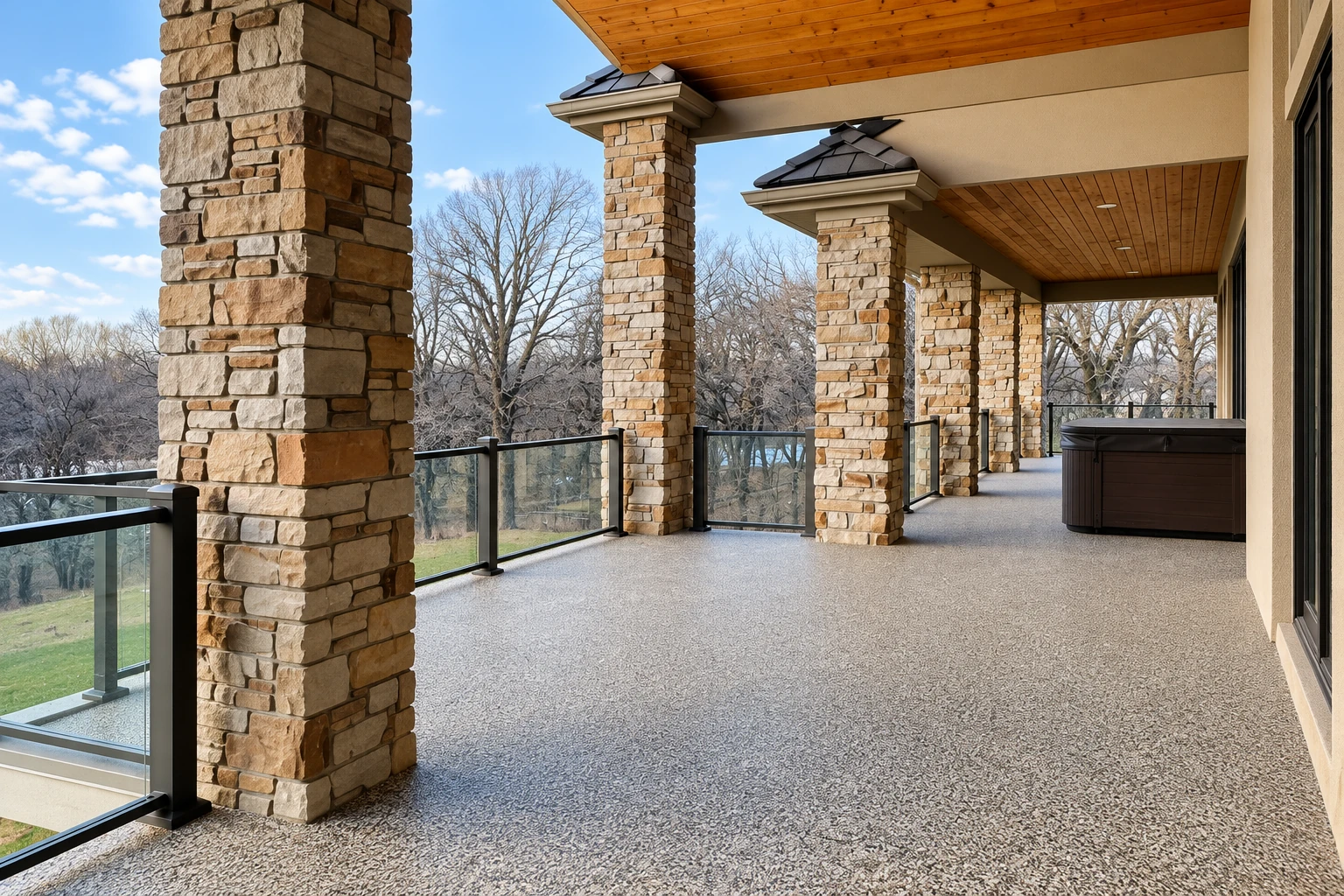
Garage floor concrete work in Manchester means pouring a new slab or repairing the worn top of an old one, so you end up with a floor that holds up to New Hampshire's freezing and thawing and the salt your car brings in every winter.
The price mostly comes down to the size of the garage, whether the old floor has to come out first, and whether a repair will do or you need a new slab. The schedule turns on the weather and on the wait while new concrete cures, slowly hardening and gaining strength, before you can park on it, so a cold-month pour takes more planning. When I walk the garage with you, I'll write down what the price covers so you know exactly what you're buying.
Manchester's Building Division handles plan review, permits and inspections in the city, and New Hampshire's state building code sets the minimum rules here like everywhere else in the state. Before work starts we check with the city about your job, and when a permit is needed we handle the paperwork for our part of the work or help you file it. We're licensed and insured. One local cost guide puts garage slabs at the thicker end of the usual range for house floors in Manchester, and we're based right here, working in the cities around it across southern New Hampshire and into Methuen, MA.
I come out to look at every job myself, and I work alongside our crew on the build, so the person who explained your options is there when the concrete goes down.
I'd rather spend an extra hour explaining than rush you into a decision, so your estimate spells out what the price covers before you sign anything at all.
That covers every garage floor we pour or repair. Since 2023 we've run jobs the way I learned them on a small crew, with the reason behind each step explained as we go.
Why talk about the mix every time? Salt that drips off your car sits on a garage slab all winter, so the mix is part of every quote we write, and I'll explain what we'd use and why. If your old floor is flaking, I'll also tell you straight whether it can be fixed or should come out, because a patch on a floor that keeps coming apart is money you end up spending twice.
When a slab is coming out, we break it up and haul it away before we form and pour the new one. We plan the pour around the weather, because concrete that dries too fast in midday summer heat can end up with a weak, dusty top. We cut control joints, shallow grooves that give the slab a planned place to crack, so any cracks run in a straight line instead of wandering across the floor, and I'll show you where they'll go before the pour. Then we leave the slab to cure and tell you when it's ready to use.
If you'd like color, a stain or a pattern on the floor or the apron outside, that's decorative concrete work, and we can plan it with the slab. Garages built into a slope often need a wall to hold the soil back beside the driveway, and we build concrete retaining walls too.
When you're building a garage, we pour the slab it sits on and plan the joints and finish with you, so the floor is ready for a car and whatever else ends up in there.
If the old slab is cracked through or flaking badly, we break it out, haul it away and pour new, and the estimate shows the removal as its own part of the price.
When the damage is light enough, fixing the top of the slab saves you a full tear-out. I'll tell you whether yours qualifies before you spend anything on it.
Garages that double as a shop take jacks, heavy tools and dropped parts, so we talk through how you use the space before we settle on the slab and the finish.
Send the form and we'll reply within one business day. I'll walk the garage with you for a free estimate, explain what I see and write down what the price covers, with no pressure to book.
A rough length and width, or just one bay or two, tells me the scale of the job, so we can talk about real options when I come out instead of starting from zero.
Tearing out an old slab changes both the work and the price, so let me know if you're thinking new floor, a repair, or you're not sure yet and want my opinion.
A few close-up pictures of the worst spots show me how deep the damage goes, so I can come out with a fair idea of whether a repair is realistic.
Example photos of smooth and textured slab finishes, sealed surfaces and garage layouts, to help you picture options worth talking over at the estimate.
Straight answers to what Manchester homeowners ask us most about cost, curing, winter pours, flaking and keeping salt off a garage floor.
Concrete slabs in Manchester usually run about $6 to $12 per square foot, not counting staining or stamping. That's what slab work generally costs around the city, not our price, and if an old floor has to come out, removing it is added on top. After I walk your garage, I'll write down your own price and what it covers.
By one cost guide's general advice, you can walk on a new slab within 48 hours but should wait a week before heavier loads like a car. A concrete trade group says curing typically continues for 3 to 7 days after the pour. We'll tell you when your floor is ready to park on.
Often it can be repaired if the flaking is light to moderate. Flaking, which the trade calls scaling, comes from freezing and thawing, and minor scaling is cosmetic and may not need repair at all. Heavy scaling that keeps spreading may not be worth repairing, which points toward a new slab. Send a few photos and I'll tell you which way yours leans.
Yes, as long as the concrete is kept from freezing. Fresh concrete freezes below about 25°F, and frozen concrete can lose more than half its potential strength and won't be durable, so it needs protection for about two days after the pour. Snow and ice should be cleared first, and the surfaces it touches kept above freezing, which can mean insulating or heating them.
Industry guidance calls for good-quality air-entrained concrete wherever it faces severe freezing and thawing, which is what a garage floor in New Hampshire usually deals with. That mix holds tiny air bubbles that give freezing water room to expand, so the pressure behind surface flaking doesn't build up. It's worth asking about the mix on every quote you get.
Hose off the salt your car leaves on the floor whenever the weather allows, because deicing chemicals make flaking worse. A concrete trade group also advises a breathable sealer or water repellent made for concrete slabs, put on when the concrete is reasonably dry, and it calls late summer after a few dry days an ideal time.
Call (603) 591-9259 any day of the week or use the form, since booking before the cold gives you more choice of pour dates.