Replacing a flaking old patio
When the top of an old slab peels off in thin flakes, that's usually frost damage, so we break it out and pour a new one with a mix made for winter.
Old patio flaking, cracked or holding puddles? We pour a new slab with a mix and finish made for New Hampshire freeze and thaw.
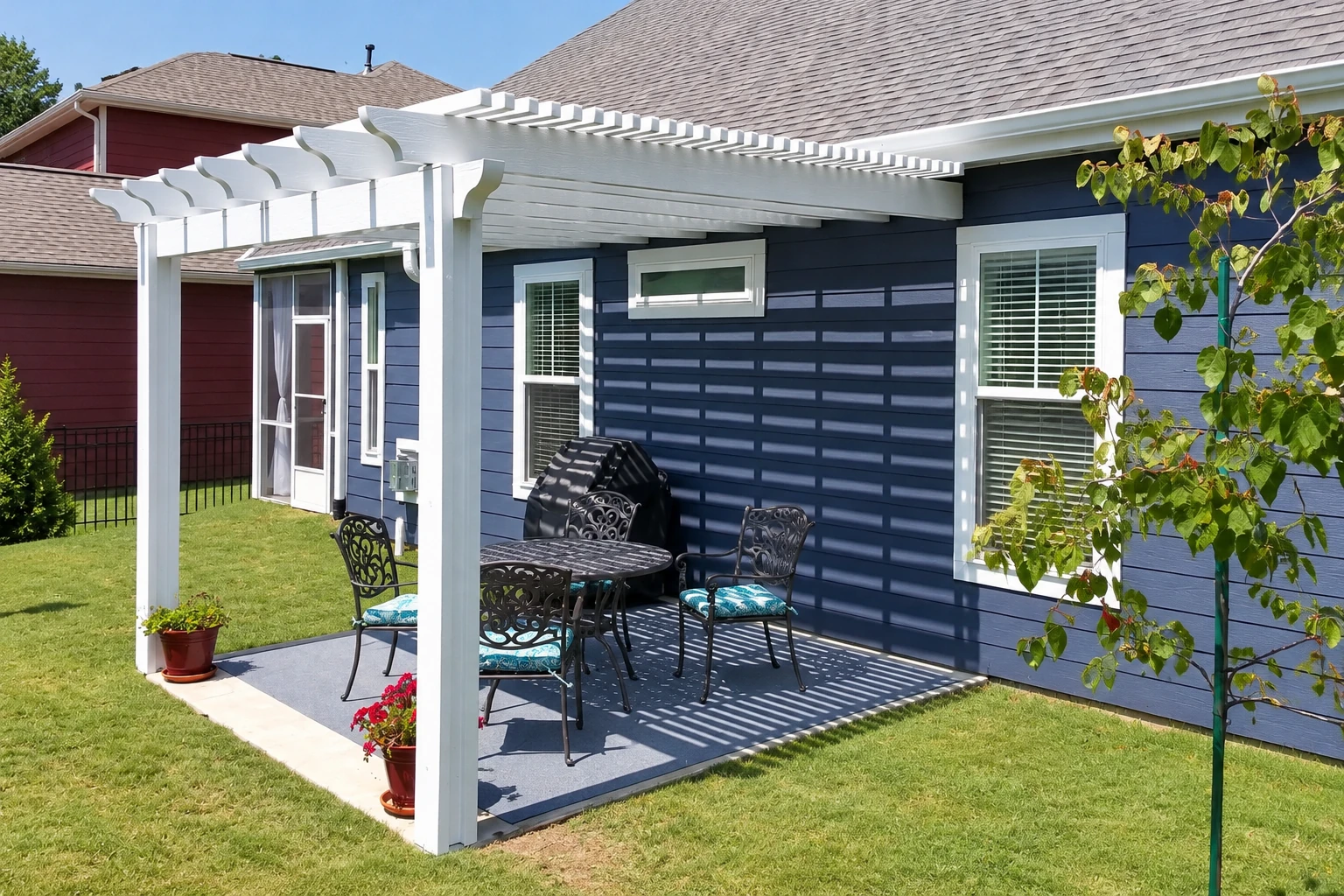
Concrete patio construction in Manchester means we place a new slab of outdoor concrete, finish the surface and let it cure, so you end up with a flat, solid patio that stands up to New Hampshire winters.
Most calls start with an old patio that's flaking on top, cracked through or holding water after rain. Others start with a bare patch of yard you'd like to use. Either way, the new slab has to live through our winters, so most of what we decide together is about the mix, the weather and the finish, not just the shape.
The price moves mostly with the size and shape of the patio, how easy it is to get concrete to the spot, whether an old slab has to come out first and the finish you pick. The schedule turns on the weather, because we plan the pour around frost, and on the curing wait before you can use it. For your own number, I walk the site with you, explain what I see and write down what the price covers. We're licensed and insured, and before work starts we check with the local building office about your job.
I come out to look at every job myself and work alongside our crew on the build, so the person who planned your patio is there the day it's poured.
Before you sign anything, I'll explain your choices on size, finish and timing in plain words, because a patio is easier to get right when you understand what's behind the price.
Our patios are satisfaction guaranteed. I started this business in 2023 after learning the trade on a small crew where every step came with a reason, and we still work that way.
A patio sits out through every freeze and thaw, so we order a mix built for that and keep the surface texture simple so it holds up. We set the slab to shed water away from your house, because a patio that tips toward the foundation sends every rainstorm against your walls. Once the concrete is placed and leveled, we give it a broom finish, a light texture dragged across the wet surface so it isn't slick underfoot. Then we cut control joints, shallow grooves that give the slab a place to crack in a straight line we chose instead of wandering across the middle. After that comes curing, the wait while the concrete hardens, and we keep it covered so the top doesn't dry out too fast and turn weak and dusty.
The choice I talk through most is the finish. A heavily worked or fancy surface can look sharp the first summer, but working the top too much knocks out the tiny air bubbles that protect it from frost, so for a plain patio I'll steer you toward a broom finish. If you really want a pattern or color, our stamped concrete services are the way to get it, and I'll walk you through how it compares before you decide.
Most patios need a way to reach them, too. If you want a path from the driveway or the back door, we can handle concrete sidewalk building on the same job so the walk and the patio meet cleanly. Does that make sense so far? That's the whole job, and none of it gets skipped to save a day.
When the top of an old slab peels off in thin flakes, that's usually frost damage, so we break it out and pour a new one with a mix made for winter.
A simple patio off the back door is what most people ask about, and we size it so a table and chairs fit with room to walk around them.
If rain sits on your old patio or runs toward the foundation, we pitch the new slab so water drains off toward the yard where it belongs.
Many patios meet a back step or a path, so we plan where they join at the estimate and pour them to line up instead of leaving an awkward lip.
Send the form and we'll reply within one business day to set a time. I'll come out, walk the yard with you, explain what I see and write down what the price covers, with no obligation to book.
A rough length and width is plenty, even if you just paced it off, because size drives a big part of the price and we'll measure exactly when I'm there.
Tell us if the ground falls off or climbs where the patio goes, since a steep spot can change the plan and the city has its own rules for digging on slopes.
If your yard is close to water, mention roughly how far, because building near a lake, pond or river brings state rules into it and we check those first.
These photos show broom, stamped and plain finishes and a few patio layouts you can point to when we talk about yours.
Here are the questions Manchester homeowners ask most about the mix, pour timing, winter care and city permits for a new patio.
Good quality air-entrained concrete is what national concrete industry guidance calls for where slabs see severe freezing and thawing. It holds millions of tiny air bubbles that give expanding ice room, which keeps the surface from flaking. You can ask for it by name, and it's the kind of freeze-and-thaw mix we order for patios.
Pick a stretch of weather with no freezing temperatures expected soon after the pour. The same national guidance urges caution in late fall, winter and early spring, because concrete that freezes while it's still soaked can be damaged. Here that usually points to late spring through early fall, and we watch the forecast before we set the day.
Skip deicing chemicals for the patio's first winter, then use them in moderate amounts after that. Deicers soak into the surface and add extra freeze and thaw cycles, and that's what makes concrete flake. That first winter, shovel it clean and use sand if you need grip.
The city's Building Division approves building permits and also handles plan review and field inspections. The Department of Public Works permits land disturbance over half an acre, or over 1,000 square feet on a slope of 15% or more. When a permit is needed for your patio, we handle the paperwork for our part of the work or help you file it.
Yes, within 250 feet of a protected body of water, the city's building code requires construction to follow New Hampshire state law and rules. Protected waters include lakes, ponds and dammed-up ponds larger than 10 acres, plus certain larger streams and rivers. If your yard is near water, tell us at the estimate so we sort that out before planning.
Wait until the concrete is reasonably dry, and late summer after a few dry days is an ideal time, according to that national guidance. So plan sealing as its own task, not something done the day of the pour. Curing comes first, either with a tinted liquid curing compound or wet burlap and plastic sheets, and you're welcome to ask which we'll use.
Seeing your yard answers what a page can't, so call (603) 591-9259 or send the form from anywhere around Manchester and southern New Hampshire.