Replacing a cracked or sinking driveway
When the old slab has heaved, cracked or holds puddles, we break it out, look at why it failed and fix the base before we pour, so the new one isn't sitting on the same problem.
Old driveway cracked, sinking or holding puddles? We dig out and pack the base first, so the new slab sits flat and drains away.
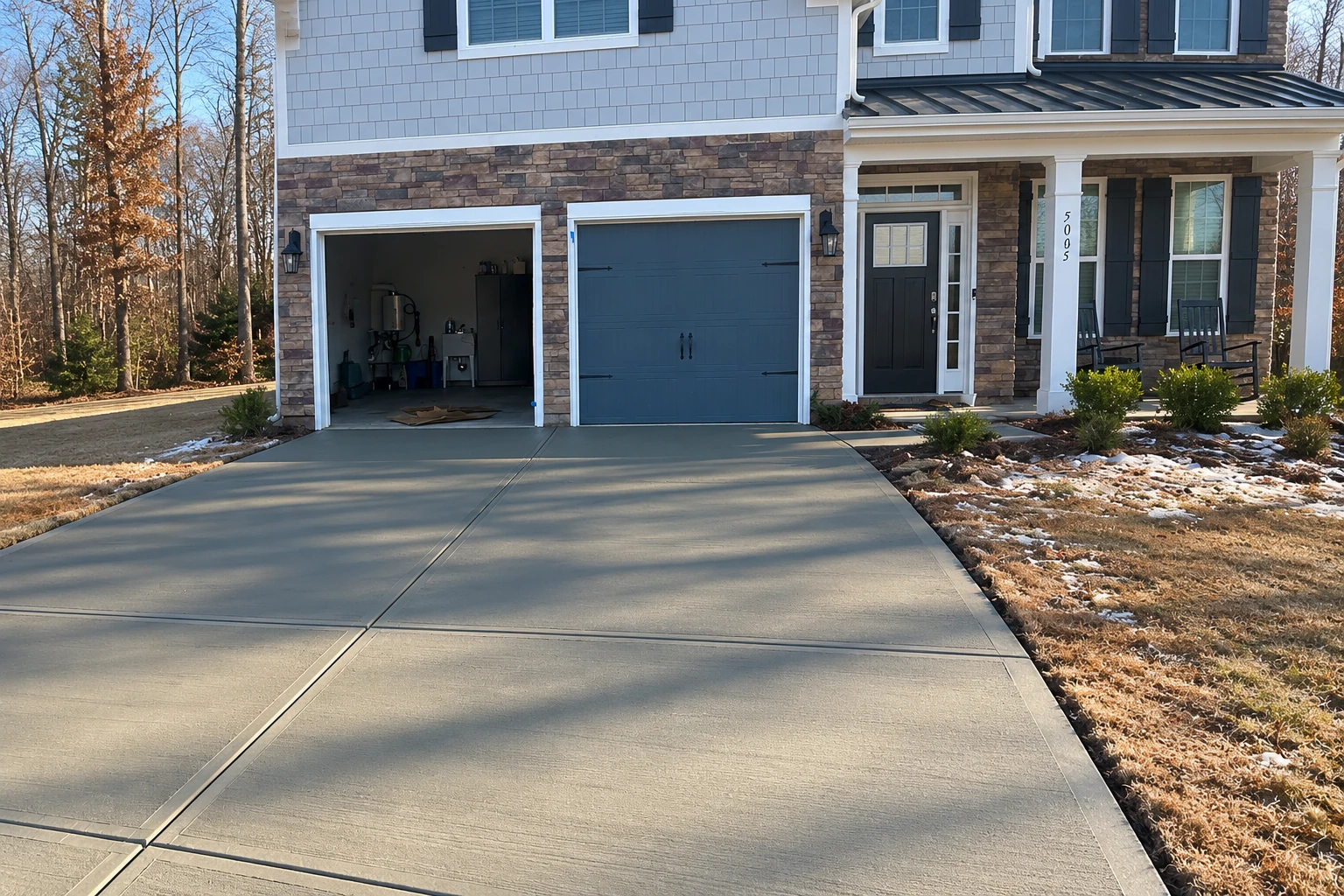
Concrete driveway building in Manchester, NH means digging down to firm, evenly drained soil, packing a level granular base on it and pouring a slab sized for what you park. You end up with a driveway that sits flat and sends water away from the house.
Around Manchester, frost usually reaches about 48 inches down, so the ground under a driveway freezes and thaws all winter. If water sits in the base, it freezes, swells and lifts the slab, which is why the cracks and sunken corners you're looking at usually started underneath, not on top.
Size moves the price most. It also matters whether an old driveway has to be broken out and hauled off, how much digging the base needs, and what you park and how you treat it in winter, since those set the thickness, mix and reinforcement. The schedule turns on the weather and on how long the slab needs before you can drive on it. Your own figure comes from the estimate, written down with what it covers. Manchester Concrete Works is based in Manchester and works the cities around it across southern New Hampshire and into Methuen, MA, so call (603) 591-9259 if your city isn't listed.
I look at every driveway myself before we quote it, and I work alongside our crew on the build, so the person who explained the job is the one watching it go in.
I'd rather spend an extra hour walking you through your choices than rush a pour, because you should understand what you're paying for before you sign anything.
Since 2023 we've been known for flatwork, the driveways, patios and walks around a house, so we know where these jobs usually go wrong and plan around it from the first visit.
Before I write a number, I ask what you park on the driveway and whether you salt it in winter, because both change the mix and reinforcement we quote. Then I write down what we picked, so when you set our quote next to someone else's, you can tell whether you're comparing the same driveway. Make sense?
On the job, we dig out the old slab or the topsoil down to the subgrade, the firm soil everything rests on, and pack a granular base on it instead of just raking it level, because a raked base settles right along with the dirt under it. We set the forms so the slab falls away from your house and check where the water will run before anything is poured. We pour early in the day, since a slab finished in the midday heat can end up with a weak, dusty top.
We give it a broom finish, a light texture dragged across the surface so tires and boots grip when it's wet, and cut control joints, shallow grooves that give the slab a planned place to crack as it shrinks. Curing comes last, keeping the new concrete covered and damp while it gains strength. If the budget gets tight, the base is the last thing I'd cut, because nobody sees it on day one but it decides whether the slab stays put. If you're also thinking about a concrete patio or a stamped concrete walk or border, we can plan them with the driveway so the grades and joints line up.
When the old slab has heaved, cracked or holds puddles, we break it out, look at why it failed and fix the base before we pour, so the new one isn't sitting on the same problem.
On a new house or an old gravel drive, we dig down to firm soil and shape the grade so water runs off toward the street or the yard, not toward your foundation.
Adding width or a parking pad beside the old drive means the new concrete has to sit on a base as solid as the old one. We'll tell you plainly if the old slab is worth keeping.
If a pickup, work truck or camper lives on the driveway, that changes the slab we'd build. Mention it at the start so we can quote the thickness and reinforcement to match.
Send the form and we'll reply within one business day to set a time. I'll walk the site with you, explain what I see and write down what the price covers, free and with no pressure to book.
Give us the rough size of the driveway, whether there's an old one to tear out and whether a heavy truck parks there. Those three things shape the quote, so we come ready to talk about your job.
We check with the local building office first. Work in the city right-of-way or tying into city infrastructure likely needs permits from Manchester's Department of Public Works, and we handle our paperwork or help you file.
We're licensed and insured, and every driveway we build is satisfaction guaranteed. If something about the job bothers you, tell me while we're there, because I'd rather hear it on the day than later.
Broom-finished driveways, stamped borders, patios and walks show the finishes and layouts we can talk through when we walk your site.
Straight answers on cost, thickness, reinforcement, winter salt and how soon you can park, the things homeowners here ask before getting quotes.
A concrete driveway in Manchester usually costs about $6 to $11 per square foot for unreinforced concrete, before any old driveway is removed. Tearing out an existing slab raises the cost per square foot, and reinforcement or a heavier slab adds to it too. I'll write your own figure, and what it covers, at the estimate.
Residential concrete guidelines call 4 inches generally adequate for a home driveway, unless heavy trucks park on it regularly. If you keep a work truck, a camper or a big pickup there, say so when you ask for quotes, because a thicker slab costs more and every contractor should be pricing the same driveway.
Rebar, fiber or both are the usual choices, and fiber, short strands mixed right into the concrete, is the more common one. Rebar is steel bar set up on small stands called chairs so it sits inside the slab and holds it together. The same guidelines strongly discourage wire mesh, so ask which method each quote includes.
Ask whether the quoted mix meets the latest American Concrete Institute residential code for outdoor concrete that will see deicing chemicals. For driveways like that, the code calls for a higher strength than its earlier edition and puts a cap on the water in the mix. If you salt, we'll quote a mix that meets it and write that down.
No, deicers shouldn't go on concrete that's less than a year old. Even salt carried in on your car's tires and slush may cause severe scaling on a new driveway, where the top layer flakes and peels off. Plan your first winter with no deicers at all on the new slab.
Wait at least 7 days before driving on a new driveway, so plan to park somewhere else that week. Concrete keeps gaining strength well after it looks hard, and a car's weight on a young slab can crack it. Cold weather usually slows that down, so we'll talk timing when we set your pour date.
We take calls seven days a week, early morning to 9 PM, so call (603) 591-9259 or send the form when it suits you.