The sidewalk along the street
The strip out front usually sits in the city's right-of-way, the land it controls along the road, so city permits and a possible refund come into it. The questions below cover both.
Cracked, uneven or sinking walk out front? We dig out the soft ground, pack a firm base and pour a walk that sits level.
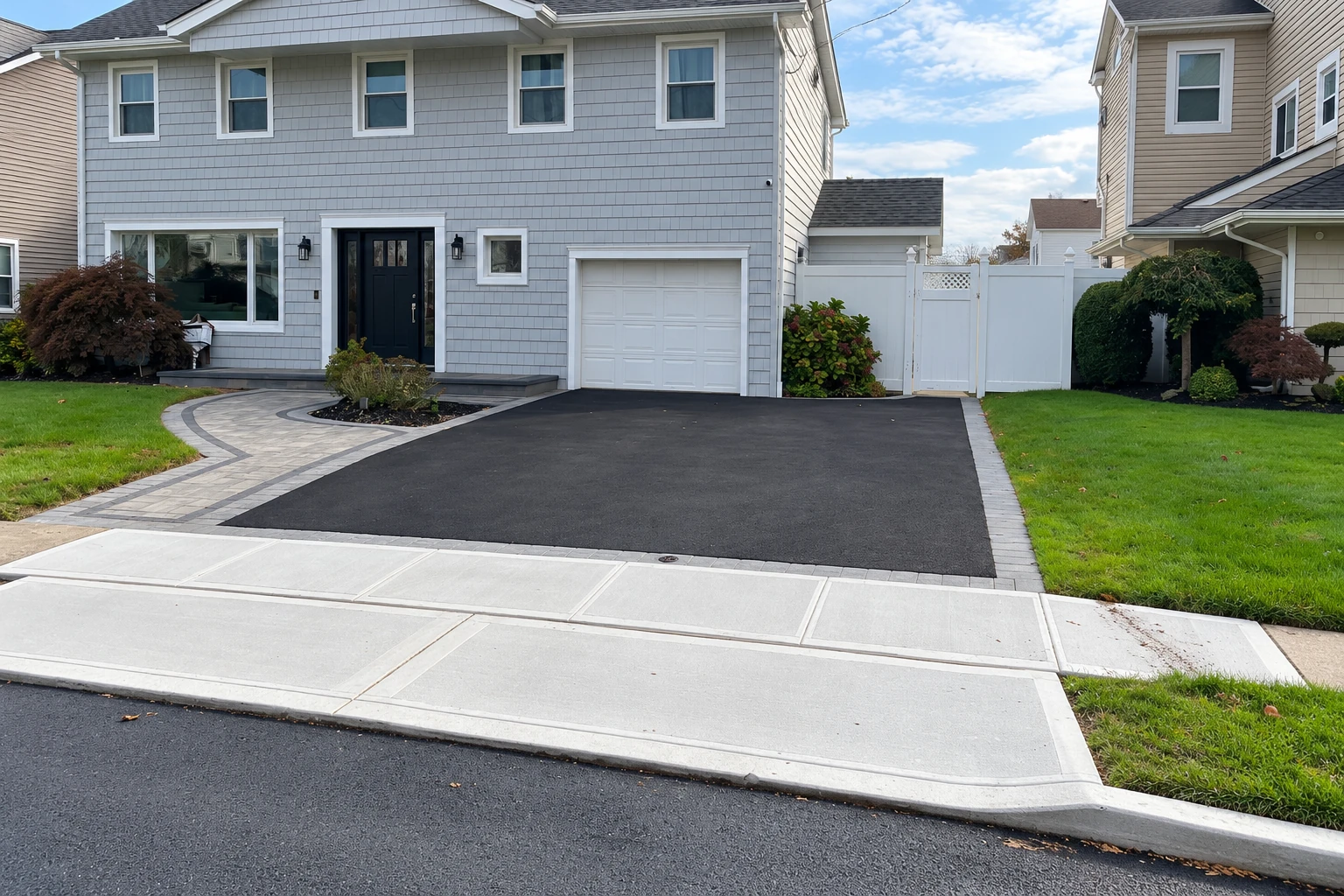
Concrete sidewalk building in Manchester means our crew digs out the path, packs a firm base and pours a concrete slab sized for what will cross it, whether that's feet, a stroller or a delivery van.
Most calls start with a walk that's cracked, sunk at one end or holding a puddle at the bottom of the steps. The price moves with the length and width of the walk, how much old concrete and soft ground has to come out, and whether part of it has to be thicker where vans cross, and your estimate spells out what your price covers.
The schedule turns mostly on the weather, the days new concrete needs to cure and harden before you use it, and the city's sign-off when the walk meets the street. If yours runs along the street, we help you sort out the city side before we dig, and as a licensed and insured crew we handle the paperwork for our part of the work or help you file it.
I come out to look at your site before you get a price, and I work alongside our crew on the build, so the person who explained the plan is there when it gets done.
I'd rather spend an extra hour in your driveway going over your options than rush a pour, so you know what you're paying for and why before you sign. Satisfaction guaranteed.
Driveways, patios and walks are most of what we do. We work in the cities around Manchester across southern New Hampshire and into Methuen, MA, so if your city isn't listed, just ask.
Most of a walk's life comes from the ground under it, so that's where our time goes before the concrete truck shows up. We dig out the soft dirt, roots and loose fill, then lay crushed stone or gravel and pack it until the subgrade, the ground the slab sits on, won't give under a boot. A base that's only raked smooth looks the same on pour day and usually starts settling with the dirt a winter or two later. It's the first thing people want to cut from a budget and the last thing I'd cut, because I'd rather put your money under the walk than into a fancy finish on soft ground.
We set the walk with a slight fall away from the house so rain and snowmelt run off instead of pooling by your door. We pour early in the day when we can, because concrete that bakes in midday heat can end up with a weak, dusty top. Concrete does crack a little as it shrinks, so we cut control joints, shallow grooves that give it a straight place to crack, and we cut them on time so any crack runs along a line we picked. Then we brush on a broom finish, a light ridged texture that grips under wet shoes.
If you'd like color or a pattern on the walk, that's our decorative concrete work, and if the walk leads to a tired garage slab, I can look at garage floor concrete on the same visit. Thinking about doing both at once? Tell me at the estimate and we'll plan the levels together.
The strip out front usually sits in the city's right-of-way, the land it controls along the road, so city permits and a possible refund come into it. The questions below cover both.
The walk from the driveway to your front steps carries everyone who visits, so we match it to the step height and pitch it so water runs away from the house.
A path around the house to the back yard or shed is usually narrower and lighter duty, so the price mostly comes down to how much digging the ground needs.
When an old walk has heaved or sunk, we break it out and look at what failed underneath, because new concrete poured over the same bad ground usually cracks the same way.
We reply within one business day. Then I come out, walk the site with you, explain what I see and write down what the price covers, free and with no pressure to book.
Put it in the form or email projects@manchesterconcreteworks.com, so I can look at the lot and the street before I come out and we know which city's rules apply.
A walk along the street needs the city's side sorted out before we dig, so knowing that up front lets us build those steps into your schedule from the first day.
If there's old concrete to break out, steps at one end or a low spot that holds water, mention it, because tear-out and fixing drainage both change the price.
Walks, patios and other flat slabs with broom, smooth and stamped finishes, plus a few layouts and borders worth talking through at your estimate.
Here's what Manchester homeowners usually ask us about permits, the city's help, thickness, cold weather and the first winter on a new walk.
Yes, digging in the city's right-of-way takes an Excavation Permit from the Department of Public Works before work starts. If the job closes or narrows the walkway, the city says you'll likely need an Encumbrance Permit too. Applicants have to meet the city's insurance and bonding rules and pay for its inspections, and we handle our part of the paperwork or help you file.
It can, through the city's 50/50 Curb & Sidewalk Program, for the sidewalk along your property's frontage, up to $25,000 per parcel. The city refunds half of its own estimate or half of your contractor's, whichever is lower. The contractor has to notify the city before the pour so the gravel base gets inspected, and again at the end, or the refund is lost.
A Michigan concrete group's guide calls for at least 4 inches of concrete, and 5 inches where delivery vehicles will cross. That's why I ask at the estimate whether vans or trucks pull over your walk, since a crossing like that changes the slab and the price.
Usually, yes, as long as the ground and the fresh concrete stay warm enough to cure. The Michigan guide calls for ground at least 40°F under the slab and covering new concrete with straw, hay or insulating blankets so it keeps curing at 50°F or warmer. For a late-season pour, ask me how we'll fit that into your schedule.
The Michigan guide says a new walk can open to traffic after 7 days of curing, or sooner once testing shows the concrete is strong enough. Curing is the slow hardening that gives the slab its strength, so plan another way to your door for that week and keep bikes and carts off it.
It's best not to, since an Ohio concrete group advises skipping deicing salt in the first year, especially on concrete placed after September. Sand or kitty litter gives you grip instead. That matters here, because a walk poured in the fall usually meets snow before it's had much time to toughen up.
Call (603) 591-9259 with your address and whether the walk meets the street, so we can line up city steps before the ground gets cold.