Front entry steps
These are the steps everyone sees and uses every day, so we size the treads and landing around your door swing and set the top step at a comfortable height below the threshold.
Steps sinking, cracking or pulling away from the house? We rebuild them on dug-out, packed ground so your entry feels solid again.
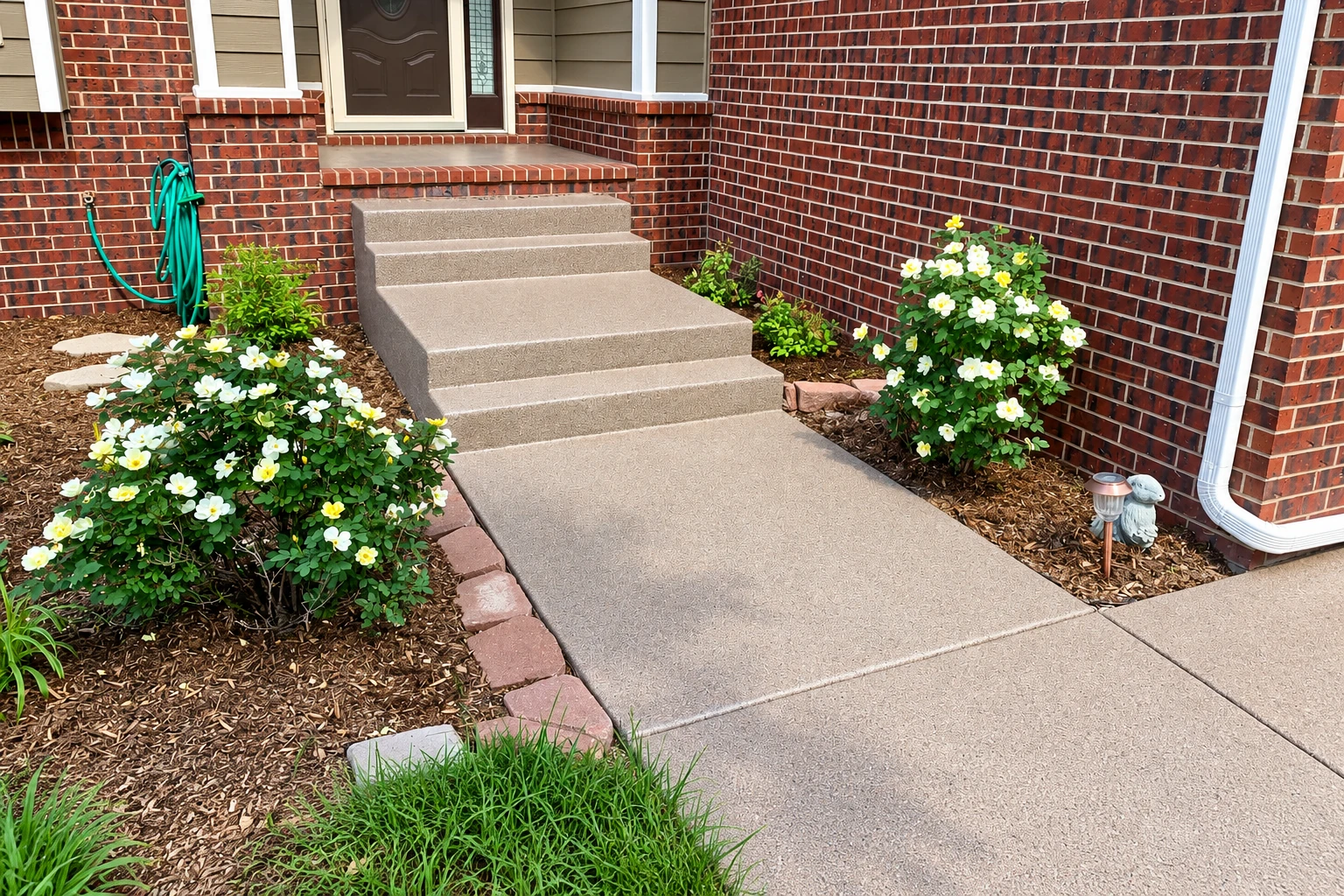
Concrete steps construction in Manchester, NH means taking out a sinking, cracked or crumbling set of entry steps and building new precast or poured ones on dug-out, packed ground, so they sit solid and level with your door.
The price mostly comes down to how many steps you need, whether you go precast or poured, how wide the steps and any landing are, and how much old concrete has to come out first. The schedule turns on the weather and on curing, the wait while new concrete hardens before you use it, so a cold stretch can push the pour back even when everything else is ready.
When I walk your entry with you, I'll explain what I see and write down what the price covers, so you have your own number instead of a guess.
I come out to walk your entry before we price anything, and I work alongside our crew on the build, so the person who explained the plan is there when it gets built.
We walk you through precast and poured for your entry and tell you which way we'd lean and why, because I'd rather you understand what you're buying before you sign.
We're based in Manchester and build steps in the cities around it across southern New Hampshire and into Methuen, MA. If your city isn't listed, ask us.
Steps that sink, tip or pull away from the house were usually set on loose fill, and even a nice-looking set won't hold up on dirt that was never packed. So we take out the old steps, dig down to firm soil and pack the subgrade, the ground the steps sit on, in layers until it stops giving. It's the same ground work we do for slab foundation building, and it's the part I won't cut when the budget gets tight, because nobody sees the base on day one but it decides whether the steps stay where we put them.
Next I look at how your steps meet the house. Steps that sit on the ground, tie into a landing or the foundation, or span as a stair each need their own footing, the concrete underneath that carries the weight, and their own rebar, the steel inside that holds the concrete together. If the job reaches into the house itself, that's foundation installation work and we'll tell you so. Then we help you weigh precast against poured, because a standard precast set fits some entries well and others need a custom pour.
On a poured set, we pour early in the day instead of in the midday heat, which can leave a weak, dusty top, and we pitch the treads and landing slightly away from the door so rain runs off instead of pooling at the threshold. The treads get a broom finish, a light dragged texture that gives your shoes some grip in wet weather. Then the steps sit through the cure, and I'll tell you when they're ready to walk on.
These are the steps everyone sees and uses every day, so we size the treads and landing around your door swing and set the top step at a comfortable height below the threshold.
Back and side steps carry groceries, trash cans and kids all day, and they're often the ones that have sunk or tipped. A simple precast set is often a good fit here.
Where your yard drops off between the driveway, a walk or a patio, a short run of steps is easier to handle than a steep path, especially when it's wet or icy.
When an old stoop is chipping, cracked through or pulling away from the house, patching usually doesn't last. We take it out and start over on packed ground.
Send the form and we'll reply within one business day to set a time. I'll walk your entry with you on a free on-site visit and write down what the price covers, with no obligation to book.
Tell us how many steps you have now and roughly how wide they are, so we come out with the right questions already in mind for your entry.
A couple of photos of the steps and where they meet the house help us spot cracking or settling before the visit. Email them to projects@manchesterconcreteworks.com.
If you already lean one way, or you honestly don't know yet, say so in the form, and we'll talk through both while we're standing at your door.
These example photos show finishes, step layouts and landing shapes you can point to when we talk about what fits your entry.
Here are the questions Manchester homeowners ask most when they're replacing entry steps, with straight answers on cost, type, timing and permits.
Across the US, installed precast or poured concrete steps usually run about $100 to $500 per step. That's a national figure, not our price, and it covers the steps themselves, installed. For your own Manchester number, I'll walk your entry with you and write down exactly what the price includes.
Precast steps usually cost less because they're hollow and easier to put together, while poured steps cost more but come in a much wider range of sizes. If a standard size fits your door and landing, precast is often the better buy. If your entry is wide, oddly shaped or needs a bigger landing, poured usually makes more sense.
The best time is a stretch when no freeze is expected soon after the pour. The ready mixed concrete trade group urges caution with outdoor concrete in late fall, winter and early spring, because freezing while new concrete is still saturated is the worry. For steps facing hard freeze and thaw, it also advises air-entrained concrete, a mix made for those conditions.
Concrete steps usually last 30 to 40 years with proper care and upkeep, so it pays to plan for a little care instead of an early replacement. That care starts in the first winter, when the concrete trade group advises skipping deicing chemicals on new concrete altogether, then using them in moderate amounts after that.
New Hampshire law says all buildings, building components and structures built in the state have to comply with the state building code and fire code. Codes can set riser height, tread depth, landings, width, handrails and guards, so it's fair to ask any contractor how their design meets those rules. We'll go over that with you at your entry.
Manchester's Building Division handles plan review, permits and inspections, and the city's permit applications are online. Many outdoor permits need a site plan drawn to scale showing every structure on your lot and its setbacks. We check with the city before work starts, and if a permit is needed we handle our part of the paperwork or help you file it. We're licensed and insured.
Call (603) 591-9259 or send the form, since an early look gives us more room to pick a pour date clear of freezing weather.