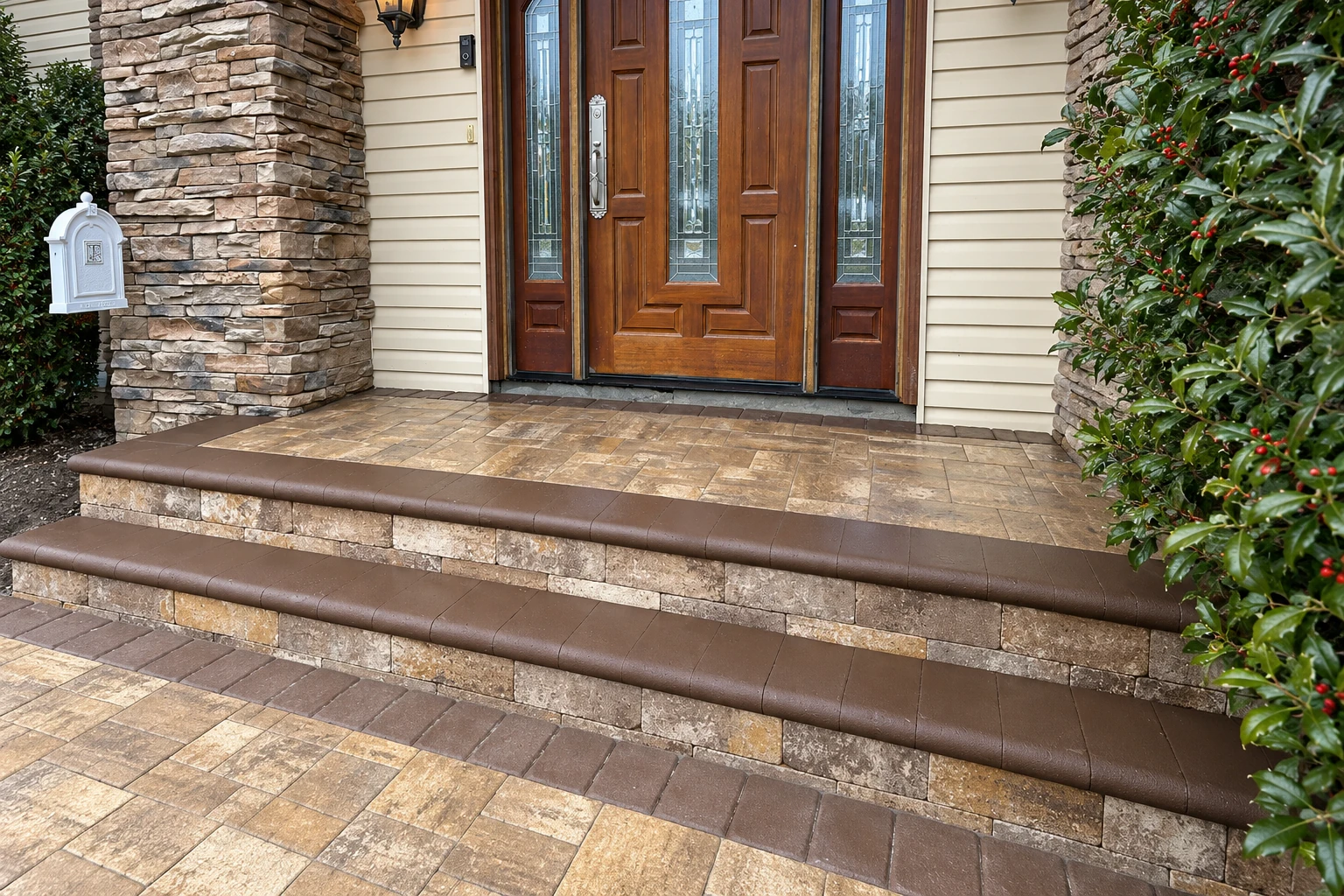
Concrete driveway building
Long driveways here mean real base work, so we dig out soft spots and pack gravel before the pour, and set rebar, the steel that holds the slab together.
Manchester Concrete Works builds concrete driveways, patios, walks, steps and slabs for homes in Raymond, NH. We're based in Manchester, and I walk every job myself before our crew starts.
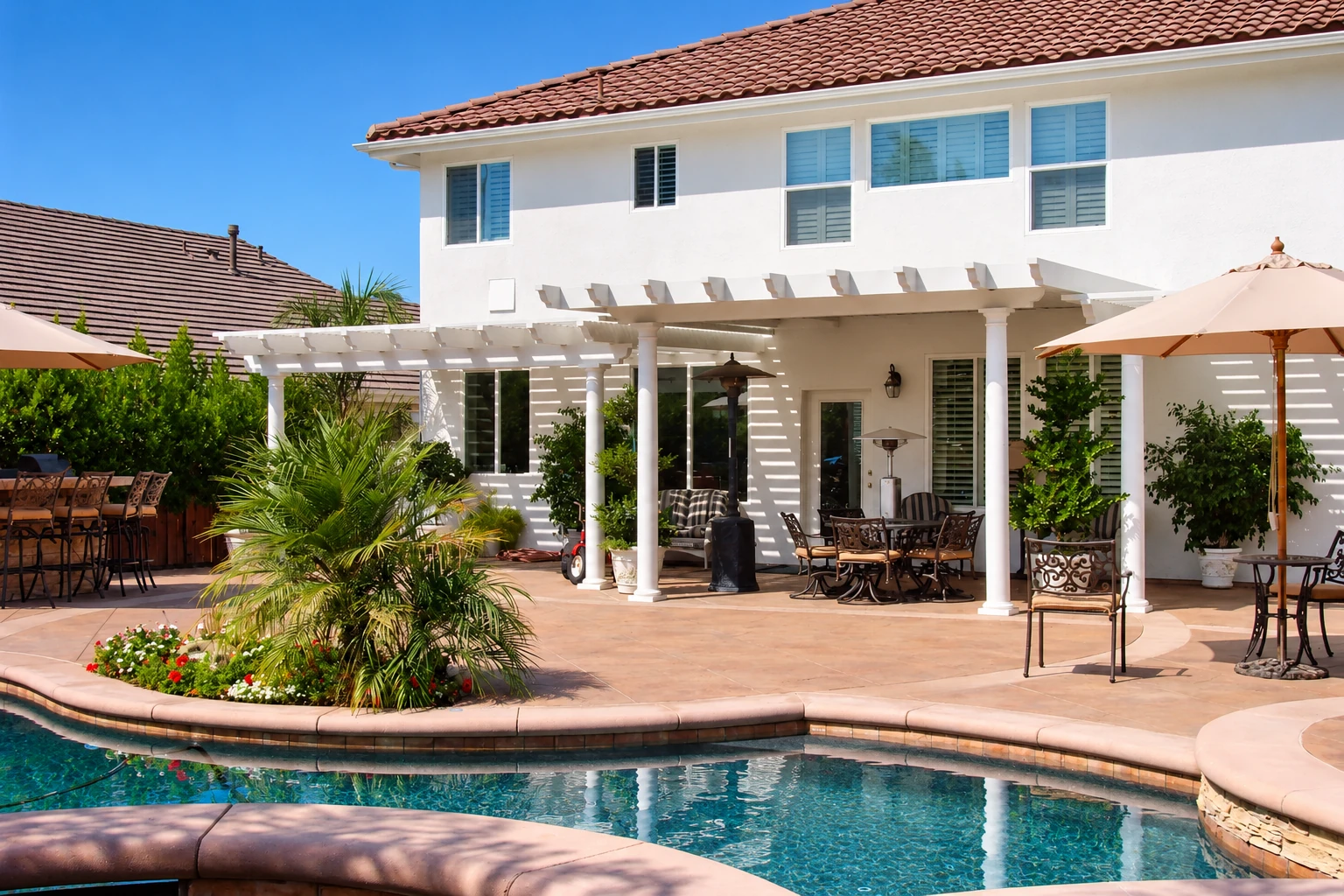
Raymond is an easy drive east from our base in Manchester, and most of our jobs there are driveways, patios, walks and steps. A lot of houses sit on wooded lots with long driveways. On lots like that, the work starts with the subgrade, the dirt and gravel your slab sits on, well before any concrete shows up.
The price mostly moves with the size of the slab, how much digging and base the ground needs, whether an old slab has to come out, and the finish you pick. A plain broom finish, the light texture that gives your shoes some grip, costs less than stamped work. The schedule turns on that same ground work and on curing, the wait while new concrete gains strength, so you'll walk on a new slab well before you drive on it. You'll get your own figure at the estimate, once I've seen the ground.
We do the same work in Derry and Auburn, so a driveway we build in Raymond goes in the same way it would there.
If the budget gets tight, I'd trim the finish, not the base, because a slab raked flat over loose dirt settles right along with it, and nobody sees the base on day one.
We look first at where water runs off your roof and yard, so the new slab falls away from the house instead of sending water back toward your foundation.
Control joints are shallow cuts that give concrete a place to crack where we choose, so we cut them on time instead of letting the slab pick its own spots.
Long driveways here mean real base work, so we dig out soft spots and pack gravel before the pour, and set rebar, the steel that holds the slab together.
A backyard patio on a wooded lot usually needs roots and topsoil cleared first, and we pitch the slab so rain runs toward the yard instead of the back door.
Stamped concrete is pressed with a stone or brick pattern while it's still wet, so we pour it early and keep enough hands on it to finish before it sets.
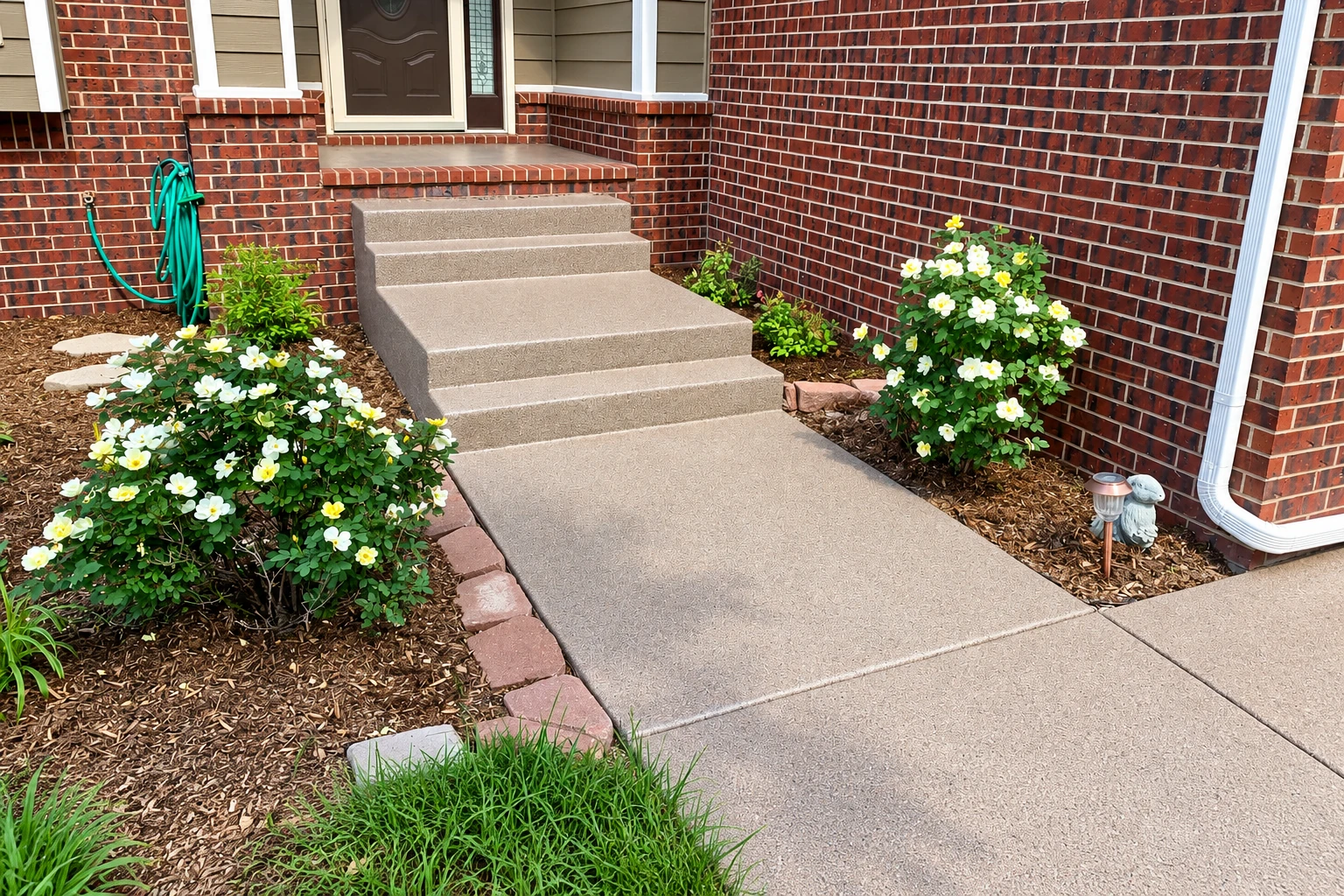
A walk to the front door is small flatwork, our word for slabs that lie flat, but it still gets a packed base and cut joints so it stays level underfoot.
Older garage floors are often cracked and sunken, so we break out the old slab, rebuild the base and pour a new floor sloped gently so water drains toward the door.
Decorative work covers color, exposed stone and borders, and I'll show you options on site, because the right finish depends on how much shade and foot traffic the spot gets.
On sloped lots a poured retaining wall holds the soil back, and we build it on a footing with drainage behind it so trapped water doesn't push it over.
Basement and shop floors get a leveled base and a smooth troweled finish, and we time the finishing to the concrete, not the clock, so the top doesn't turn dusty later.
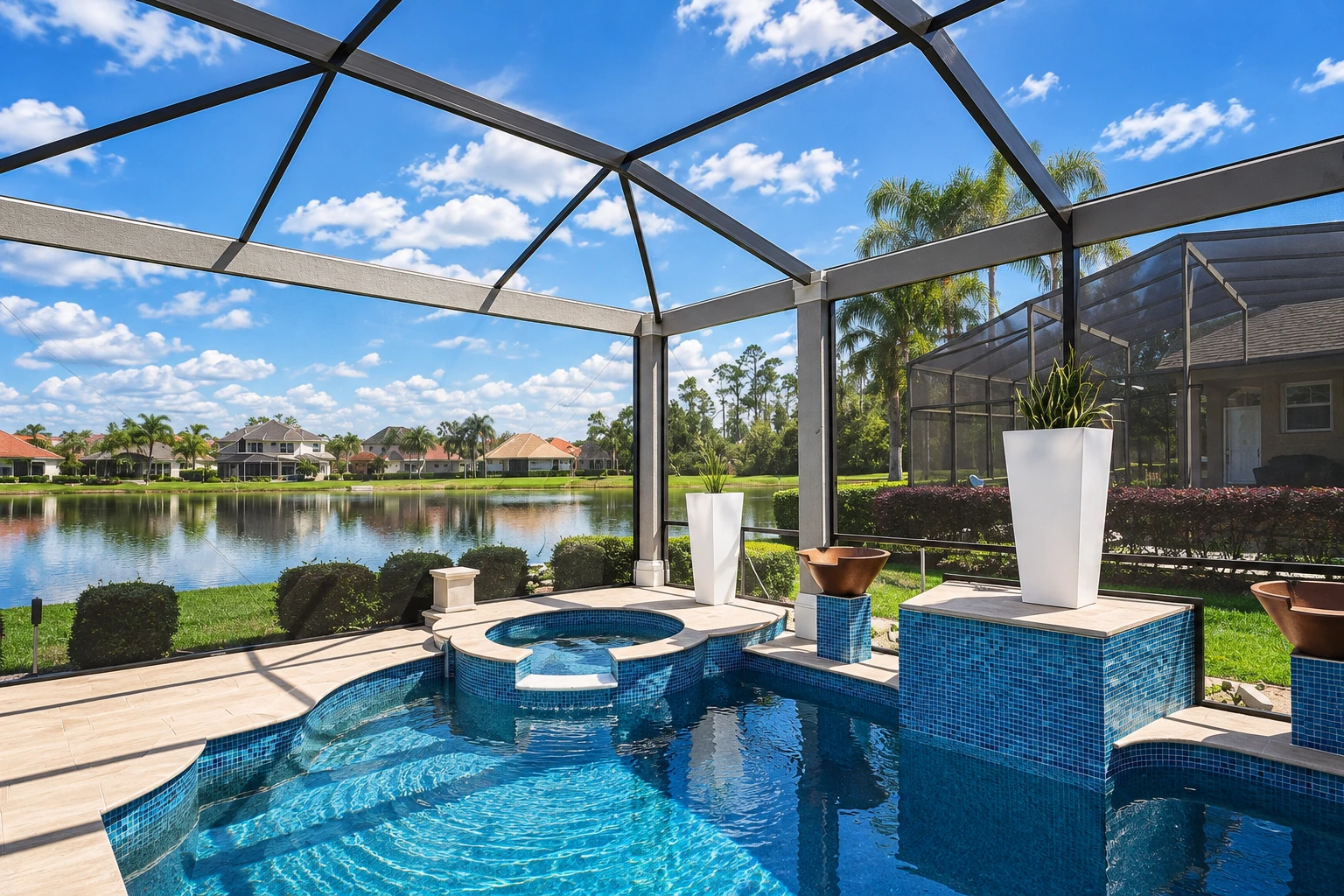
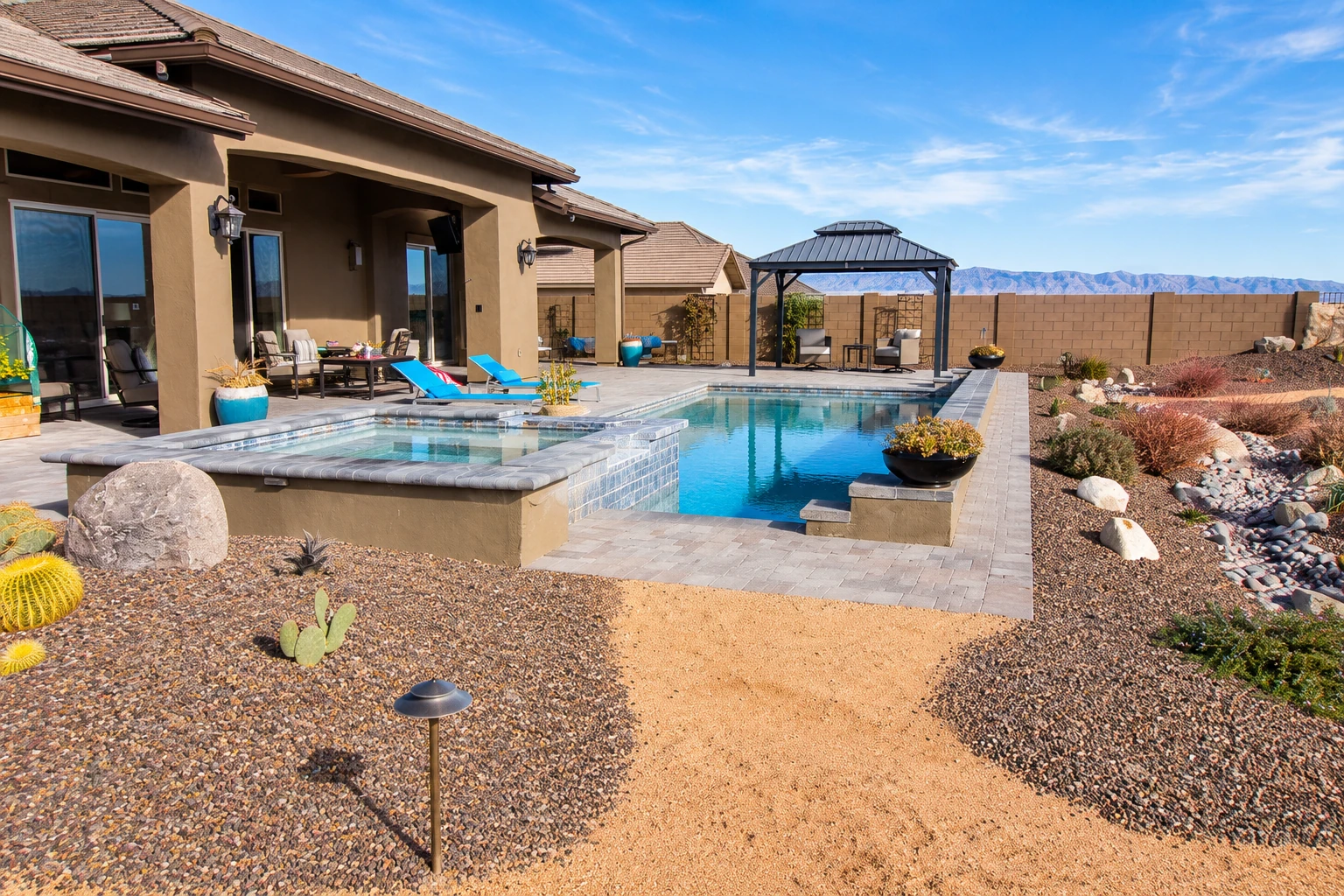
A pool deck has to give bare feet some grip when it's wet, so we texture the surface and slope it away from both the pool and the house.
Front steps are often the first thing to crumble on an older house, so we tear out the old set and form new ones with even rises so nobody trips.
For a garage, addition or shed, a slab foundation goes on a dug-out, packed base with steel inside, and I'll walk you through the thickness it needs before we price it.
When you're building a house or an addition, we form and pour the footings and foundation walls to your plans, and I go over the layout with you before forming starts.
For businesses and larger properties, a concrete lot needs a deeper base and planned drainage, so we lay out where water goes and where joints fall before the trucks show up.
Footings are the concrete pads under posts, walls and decks, and we dig them down to firm ground so whatever they carry doesn't sink over the years.
When a slab or foundation has sunk, we look at what moved and why before raising it, because fixing the cause matters as much as lifting the concrete.
We saw-cut openings, trenches and joints in existing slabs, and we cut out damaged sections cleanly so the patch ties into concrete that's still sound.
Send the form and we'll reply within one business day to set a time. Then I come out to Raymond, walk the site with you and explain what I see.
I come out to look at every job myself, so the person explaining your options is the same one who works alongside our crew on the build.
I write down what the price covers, from digging and base to the finish and cleanup, so you know exactly what you're paying for and can compare it with other bids.
We're licensed and insured, and you're under no pressure to book, so ask anything, because I'd rather spend an extra hour explaining than have you sign something you don't follow.
A few practical questions Raymond homeowners ask before a concrete job, about permits, the state code and flood maps.
Start with Raymond's Building Department, which takes permit applications through its forms and documents center. You can reach the building inspector at buildinginspector@raymondnh.gov or (603) 895-7020, Monday to Thursday, 8:00 am to 4:30 pm. Before we start, we check with that office about your job, and if a permit's needed we handle the paperwork for our part or help you file it.
Under New Hampshire's building code, the code in effect when your permit application is received stays with the work that permit covers. Through December 31, 2026, a permit request can follow either the older 2021 codes or the newer 2024 codes, but not a mix of the two. Starting January 1, 2027, every request follows the updated codes.
You can look up your flood map at the FEMA Map Service Center, which New Hampshire's floodplain map guidance names as the official online public source for flood hazard information. It has current, historic, preliminary and pending flood insurance rate maps. If you've pulled yours up, bring it along when I walk the site and we'll look at it together.
Each city below has its own page about the work we do there. If your city isn't on the list, ask us, since we work across southern New Hampshire and into Methuen, MA.
We answer the phone seven days a week, early mornings and evenings, so call (603) 591-9259 or send the form whenever it suits you.