Trucks that turn and stop
Delivery trucks and box vans turning in place push flexible asphalt into ruts and ridges. A rigid concrete slab holds its shape under those slow, heavy turns, which is the main reason owners pick it.
If your lot is cracking, pooling water or wearing out under heavy traffic, we'll help you rebuild it in concrete that lasts.
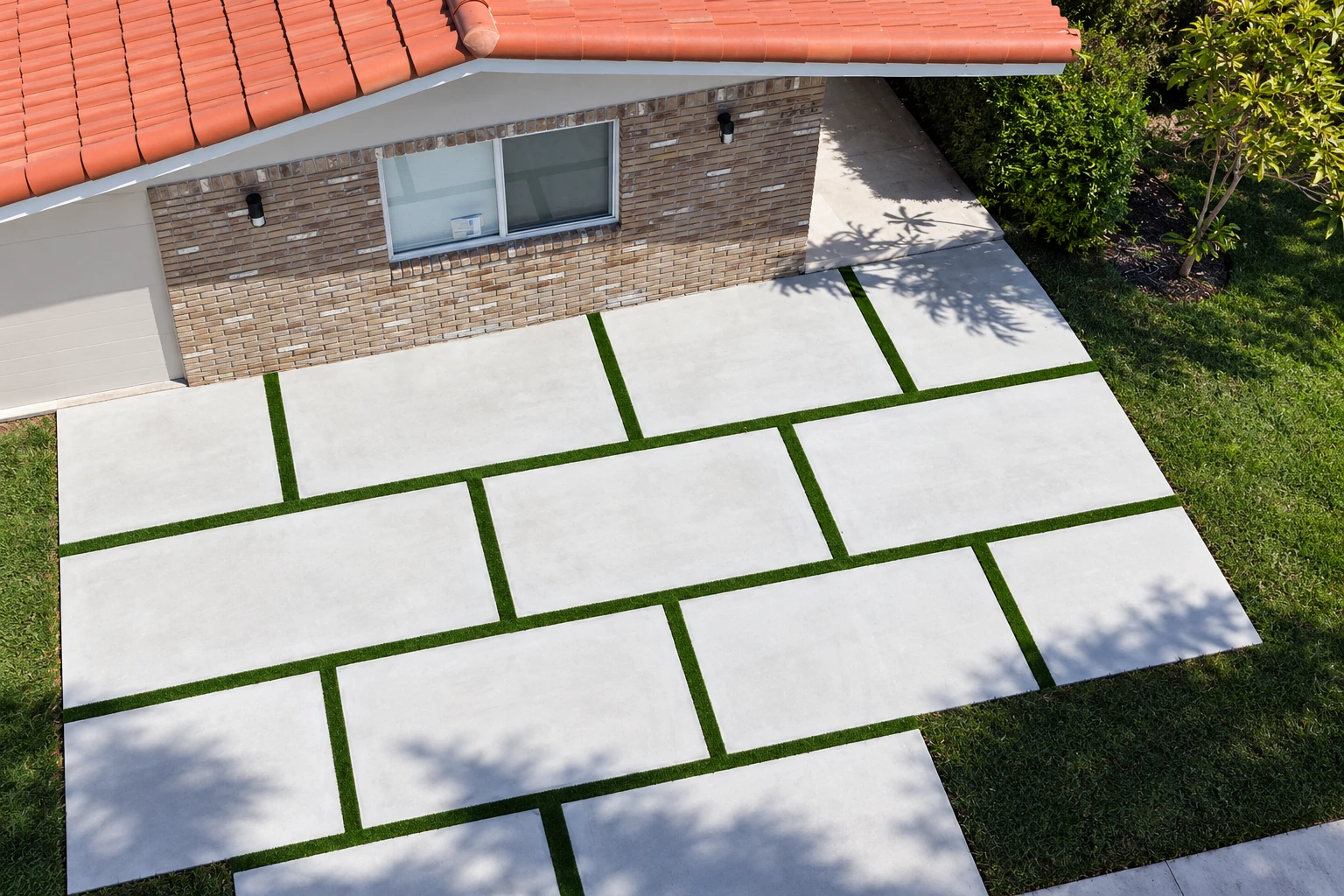
Concrete parking lot building in Manchester, NH means digging out, packing and pouring a rigid slab for your lot, so it holds up to trucks that turn and stop and lasts longer than asphalt. Concrete costs more up front and keeps the lot closed longer at the start, and we help you weigh that trade.
Most owners call because their lot is breaking up under traffic, or because they're building new and want to know if concrete beats asphalt for them. The price moves with the lot's size, how much soft ground comes out and how much packed fill goes back, the slope and drainage, how thick the slab needs to be for your traffic, and any work out at the street. The schedule depends on permits and city review, the weather, and the cure before cars can use the lot. At the estimate I walk the lot with you and write down what the price covers.
We're based in Manchester and work in the cities around it across southern New Hampshire and into Methuen, MA. If your city isn't on our list, ask us.
I come out to look at every job myself, and I work alongside our crew on the build, so the person who planned your lot is there for the pour. Satisfaction guaranteed.
I'd rather spend an extra hour going over your options than rush a pour, because you should understand what you're buying before you sign anything. Ask as many questions as you want.
We're licensed and insured, and we check with the local building office about your job before work starts. When a permit's needed, we handle the paperwork for our part or help you file it.
I start by laying out concrete and asphalt side by side for your lot, because each one asks different things of you. Asphalt is cheaper to put down and opens fast. Concrete costs more, stays closed while it cures and holds up far longer under trucks that turn in place. I show you both, including how long your lot would be closed, so you can decide if the longer life is worth it.
If you go with concrete, most of the work happens before the pour. We dig out the soft dirt and pack the subgrade, the ground the slab sits on, because a base that's only raked level settles with the dirt and takes the slab down with it. That ground work is hidden on day one, and it's the first thing people want to cut from a budget. I'd trim the finish before I'd trim the base. We also check where the water runs, so the lot sheds rain and snowmelt away from the building instead of pooling against it.
We pour early in the day when the weather lets us, since a slab that dries too fast in midday heat can end up with a weak, dusty top. We cut control joints, planned grooves that give the slab a place to crack, while the concrete is still young so any cracks follow a line we chose. A broom finish, a light texture dragged across the wet surface, gives tires and feet grip in rain and slush. If the lot needs bases for light poles or a dumpster wall, we pour those concrete footings as part of the same plan. If the building next to the lot has settled, foundation raising can bring its entrance back to grade before we set the new lot.
Delivery trucks and box vans turning in place push flexible asphalt into ruts and ridges. A rigid concrete slab holds its shape under those slow, heavy turns, which is the main reason owners pick it.
If you'll own the property for a long time, concrete's longer life can outweigh paying more now, since you skip the rounds of resurfacing asphalt usually needs along the way.
Spots where trucks back in, stop and set down weight wear out first. Some owners pave just those areas in concrete and keep asphalt elsewhere to hold down the first cost.
If you're filling potholes and sealing cracks every season, it may be time to rebuild instead of patching again. We'll look at the lot with you and tell you plainly which makes more sense.
Send the form and we'll reply within one business day to set a time. The on-site estimate is free, there's no pressure to book, and I'll walk the lot with you before writing anything down.
A rough size and whether the ground slopes help us gauge the dig and the drainage before we come out, and slope can also decide whether a city permit applies.
Tell us whether it's cars only or delivery trucks and box vans, because heavier turning traffic changes how thick the slab needs to be and how much ground work goes under it.
If the lot will tie into the street or city lines, mention it in the form so we can look at that edge closely when we visit, since it can add steps before work begins.
Example photos of broom finishes, cut joint layouts and curb edges you can point to when we talk through the plan for your lot.
Straight answers to what Manchester property owners ask us about concrete lots, from how long they last to what the city requires.
Concrete commonly lasts 30 to 40 years, while asphalt commonly runs 15 to 20 years with periodic resurfacing. That longer life is most of what you're paying for with concrete. If you plan to own the property for the long haul, weigh the higher first cost against the resurfacing asphalt would need over the same years.
Not the same day. Asphalt can open within hours once it cools, but concrete needs days of curing, the wait while it hardens and gains strength, before traffic goes on it. That's why I give you the closure along with the price, so you can plan parking, deliveries and signs for those days before we pour.
You need a Land Disturbance Permit from the city's public works department when a project outside site plan review disturbs at least half an acre, or 1,000 square feet on slopes over 15 percent. Projects that do go through site plan review are heard by the city's Planning Board. Check your own lot with the department, or bring it up when I come out.
Work in the city right-of-way, or a connection to city infrastructure, will likely need permits from public works too. The state requires an alteration of terrain permit when a project disturbs more than 100,000 square feet, or 50,000 within the protected shoreline. After approval, you meet with the city at least 10 days before site work to review the plans, so leave room for that.
Keep deicing chemicals off it, even when the surface looks hard, because new concrete needs time to cure and build strength before severe freezing or salt. Decide where snow piles and roof downspouts will land while the layout takes shape, since those spots take the hardest wear even on a lot that drains well.
Some cracking is normal, and the goal is to control where it goes. Parking lot guidance says a lot doesn't need a special subbase, but the soil beneath should be the same type, moisture and density all the way across, since soft or wet spots settle unevenly. The joints we cut then give any cracks a straight line to follow.
Call (603) 591-9259 any day until 9 PM, or send the form, and we'll set up a time to walk your lot.