Concrete driveway building
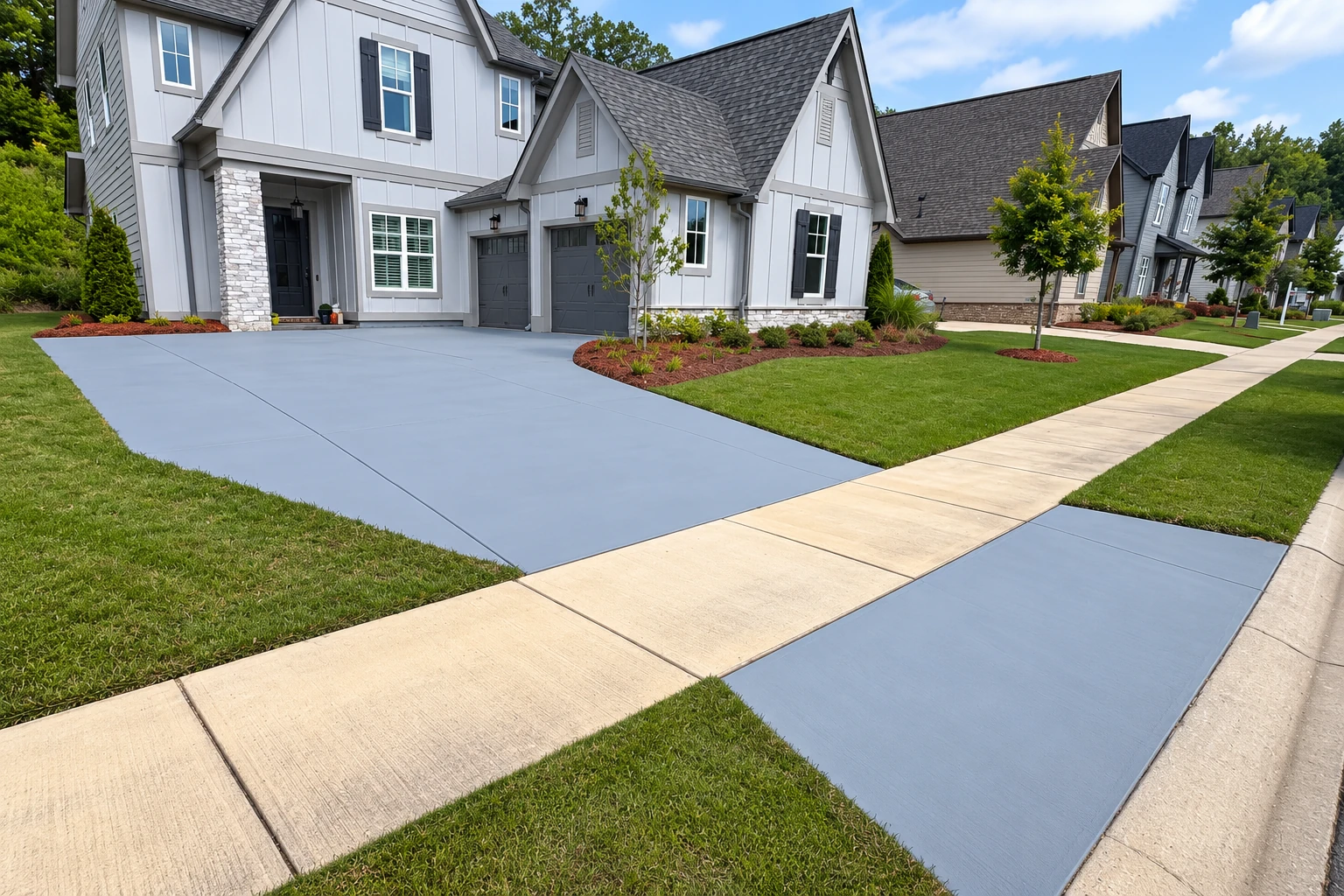
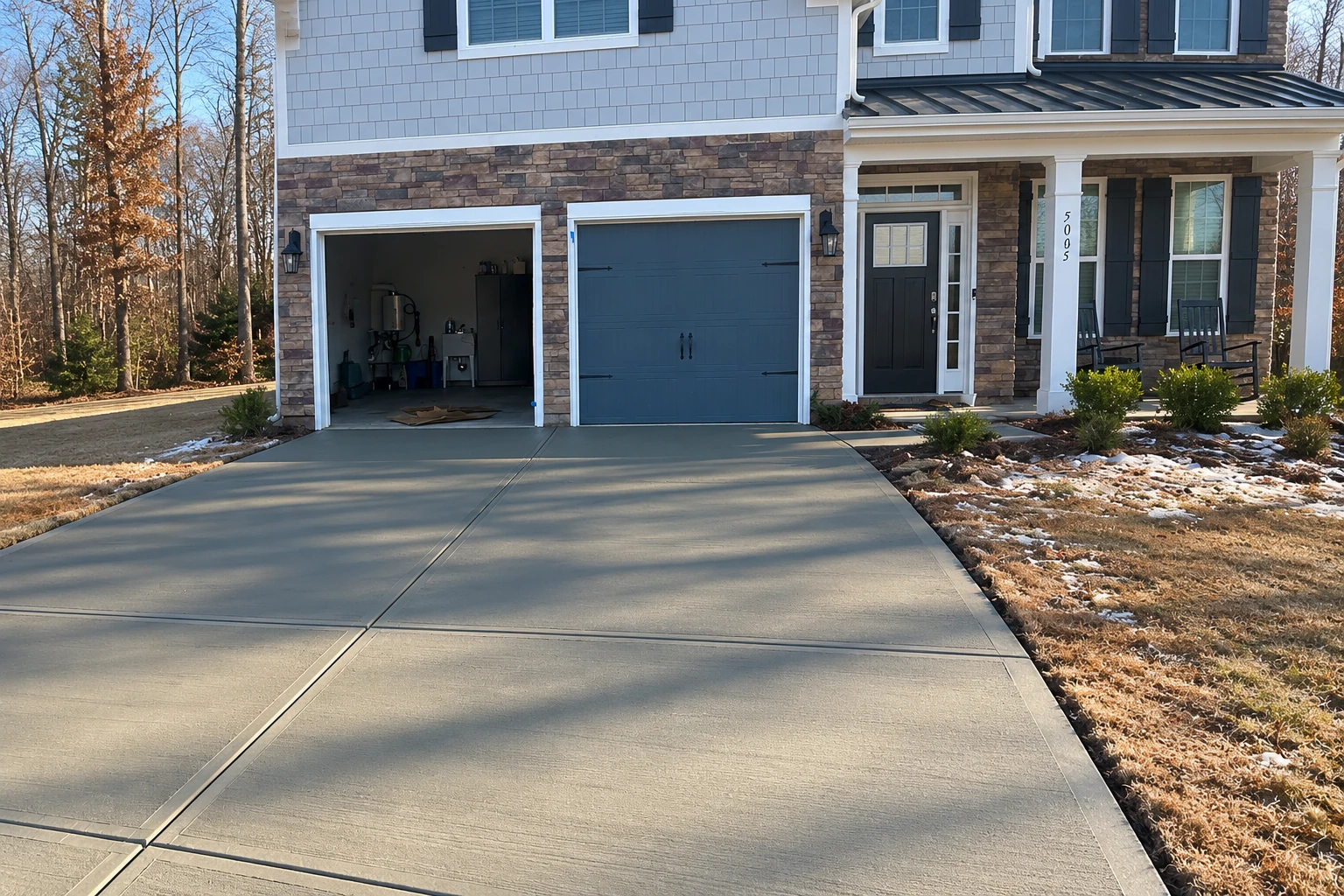
We dig out the old driveway and soft ground, pack a gravel base and slope the new slab away from the house, so meltwater runs off instead of freezing under it.
Manchester Concrete Works builds concrete driveways, patios, walks, steps and foundations in Concord, NH. We're based in Manchester, and the slabs we pour here are made for Concord's deep frost and hard winters.
If your front steps tip a little further every spring, or a driveway slab has lifted at one corner, that's frost at work. The City of Concord puts the frost line 48 inches down for building here and rates the weathering severe, so water in the soil freezes, swells and lifts whatever sits on it, and the surface takes years of freeze, thaw and salt. That's why steps, walls and anything on footings go below the frost, and why a driveway or patio needs a dug-out, packed gravel subgrade under it, since the subgrade is what the slab sits on and it has to stay put when the ground freezes.
What moves the price here is mostly what you can't see: how much old concrete and soft soil has to come out, how deep the base goes, how big and thick the slab is, how easy it is to get a truck to the spot, and the finish you pick. If the budget gets tight, I'd rather you cut back on the finish than the base, because a nice surface on a bad base cracks just the same and you can't fix the base later without tearing it all out. The schedule turns on the weather, on any city approval, and on curing, since fresh concrete needs time to gain strength before you walk on it and more before you drive on it. When I come out, I explain what I see and write down what the price covers.
We're based in Manchester and pour the same kind of work in Goffstown and Amherst, so we know how this part of the state's ground behaves. In Concord we see a lot of driveways, walks and front steps that have heaved or settled after a few winters, usually because the base under them was raked flat instead of dug out and packed.
We plan summer pours for the cooler part of the day, because a top that dries too fast turns weak and dusty, and in cold weeks we protect fresh concrete from freezing.
Control joints are grooves we cut so the slab cracks along a straight line as it shrinks, not wherever it wants. We cut them on time, because late joints miss the crack.
I come out to look at every job myself and work alongside our crew on the build. We're licensed and insured, and you deal with the same person from estimate to pour.
We dig out the old driveway and soft ground, pack a gravel base and slope the new slab away from the house, so meltwater runs off instead of freezing under it.
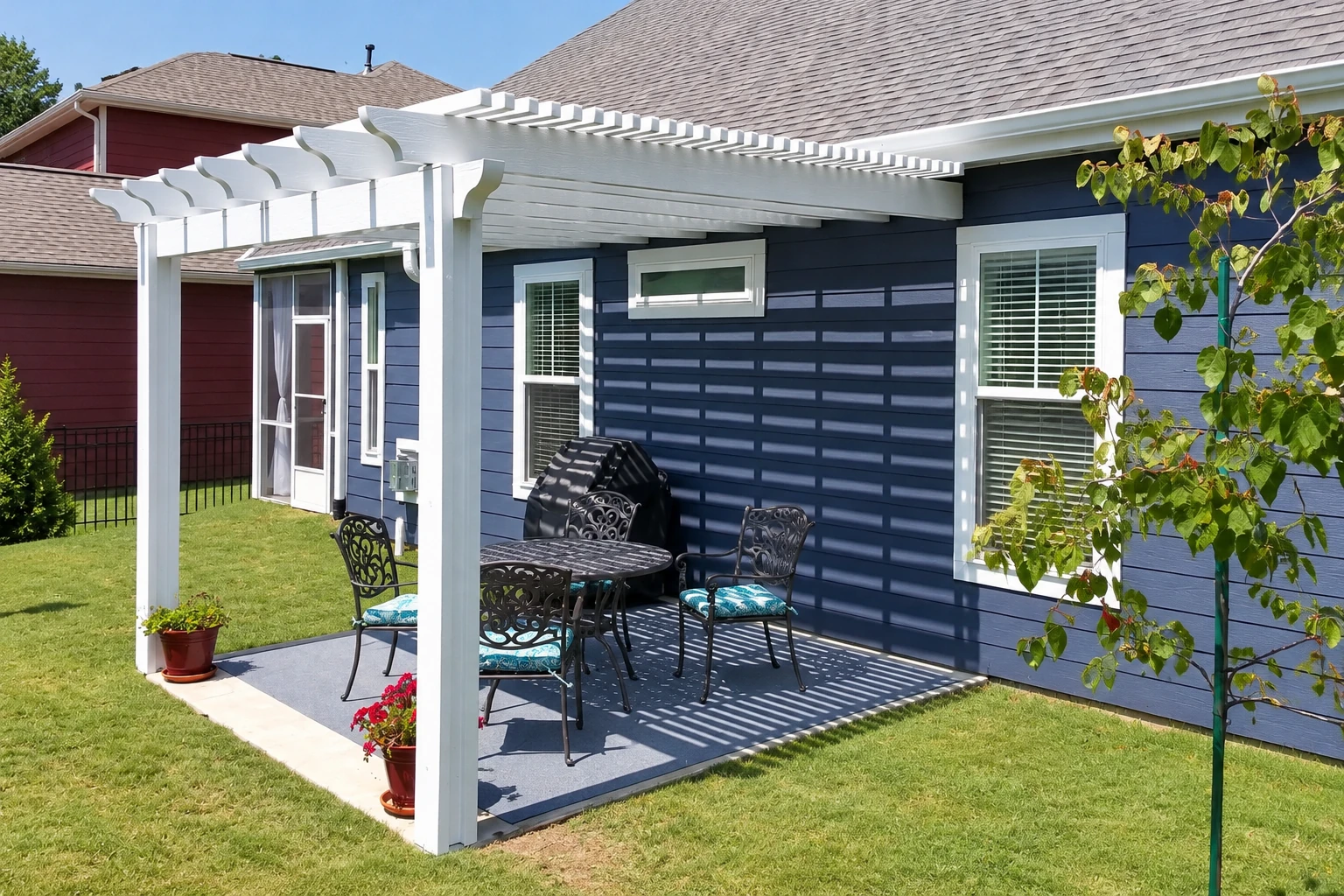
We set a patio's height and slope off your back door first, so rain drains to the yard, then pour it on a packed base so it doesn't settle with the dirt.
Stamped concrete is pressed with patterns like stone or brick while it's still soft. We seal it after curing, since a sealed surface stands up better to salt and winter wear.
Front walks take the most shoveling and salt, so we pour them on a packed base and drag a broom across the top for a texture your boots can grip.
A garage floor carries your car's weight and the salty slush it drags in, so we set rebar to hold the slab together if it cracks, and pitch the floor toward the door.
Colored, exposed-stone or scored finishes can dress up a walk or patio near an older house. I'll walk you through which finishes handle freeze and salt well before you pick one.
On sloped yards we build poured walls with footings below frost and drainage behind them, because water trapped behind a wall freezes and pushes it out of line.
Basement, shop and barn floors go on a packed base with a vapor barrier under them where moisture comes up, then get a smooth trowel finish that's easy to sweep.
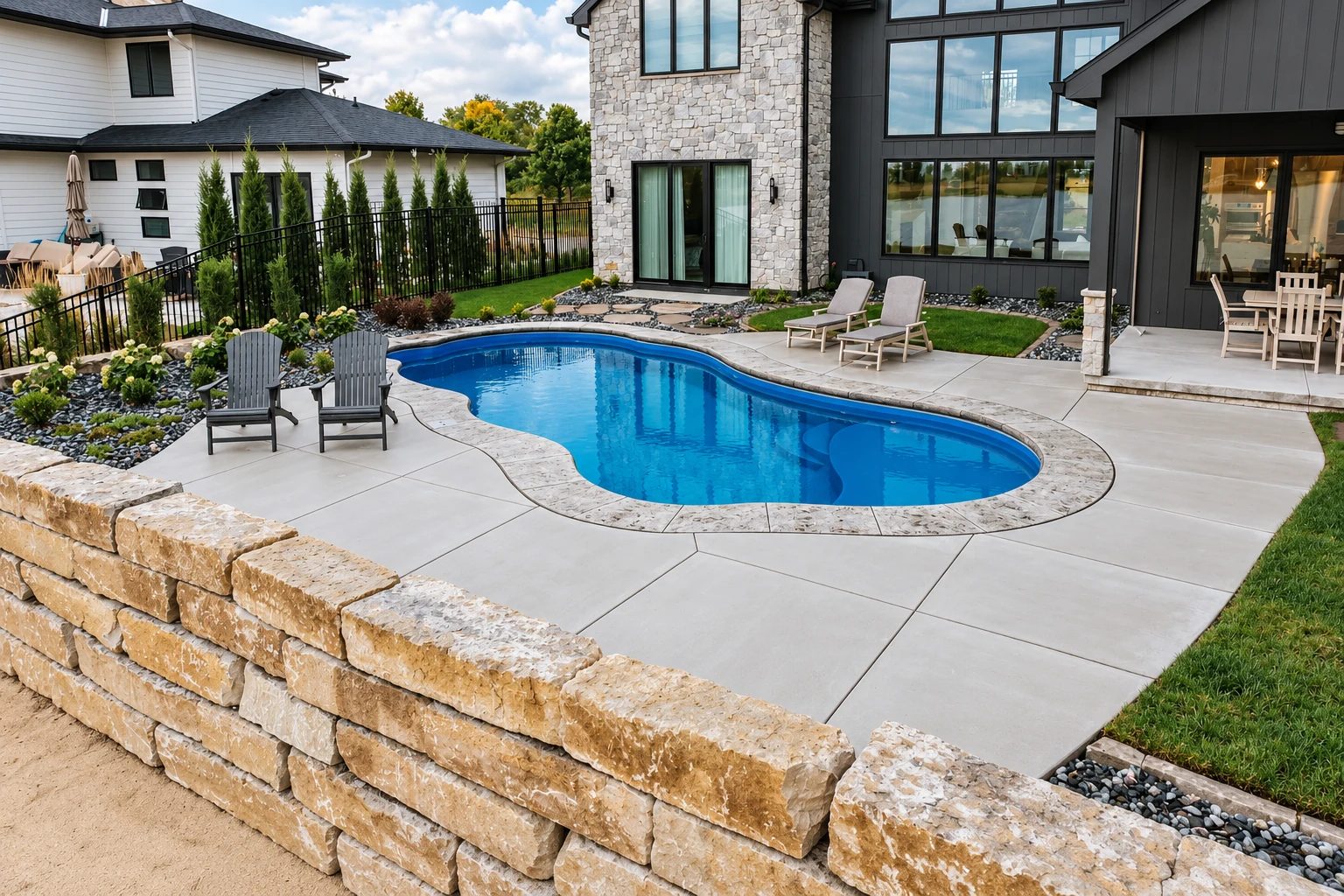
Pool decks need grip for wet feet and a slope that sends splash water away from the pool. We lay out the joints before the pour, so cracks land where we chose.
Steps that heave every spring usually sit on shallow ground, so we set new ones on footings below frost and size each rise so the steps feel even underfoot.
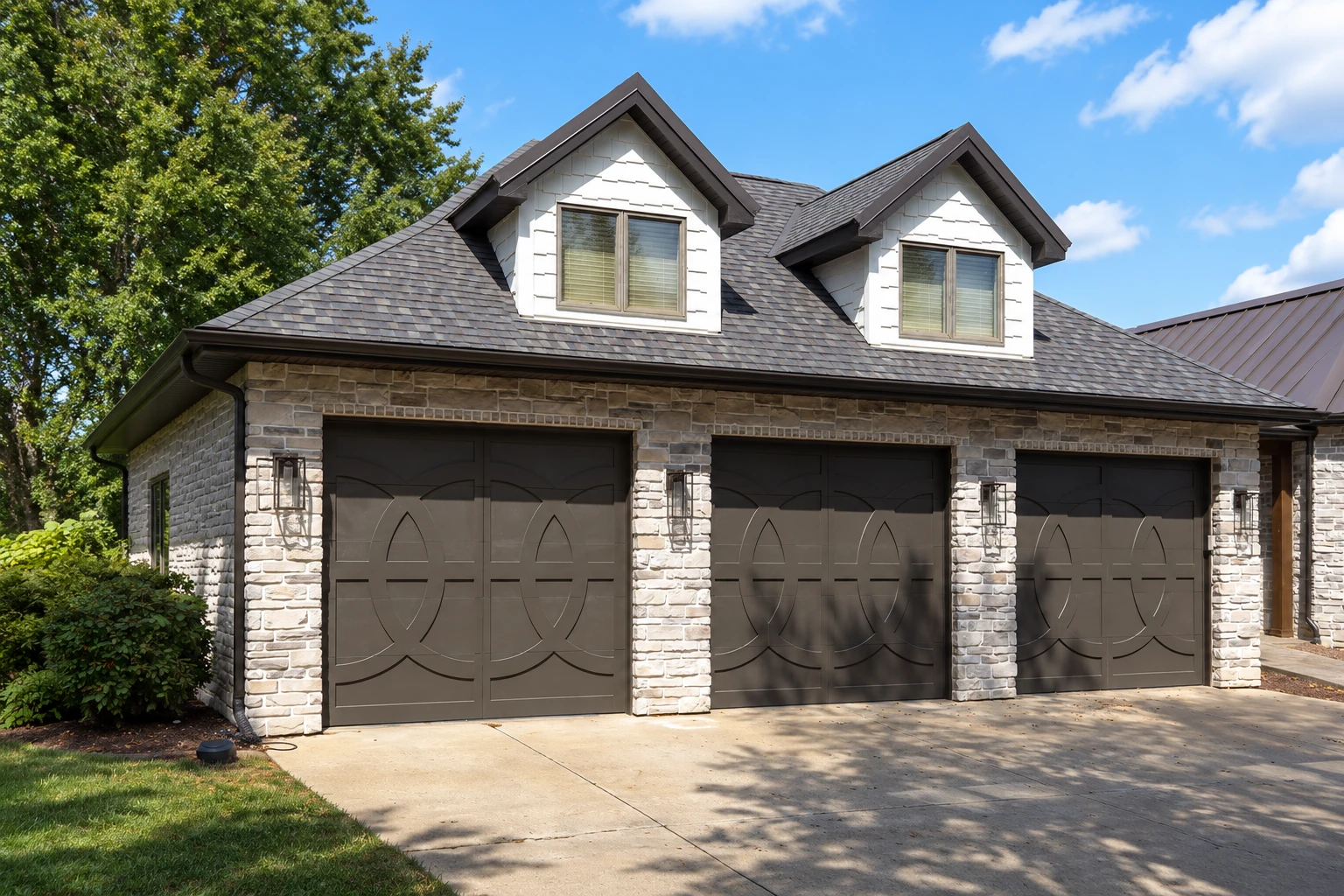
For additions, garages and outbuildings, we form and pour slab foundations with thickened edges and rebar, and grade the site first so water doesn't collect under the new building.
We dig, form and pour full foundation walls and their footings, deep enough to stay under the frost, with drainage along the outside so the basement stays drier.
Business and apartment lots take plows, salt and heavy turning traffic, so we plan thicker sections where trucks run and slope the lot toward drains before anything gets poured.
Decks, porches, additions and posts need concrete footings set below the frost line, or the ground can lift them in winter. We dig, form and pour them to your plans.
When part of a foundation or slab has dropped, I look at why first, usually water or soft ground, because lifting it without fixing the cause just buys time.
We saw-cut concrete for new doorways, drains, utility trenches and clean edges where an old slab meets a new one, keeping the dust down and the cut lines straight.
Send the form and we'll reply within one business day to set a time. I'll come out, walk the site with you, explain what I see and write down what the price covers.
The estimate costs nothing. I look at the ground, the drainage and the old slab myself, because that's where most of the price gets decided.
There's no obligation. Take the written estimate, compare it with others, and ask me anything about it before you decide.
Before work starts we check with Concord's building office about your job. When a permit is needed, we handle the paperwork for our part or help you file it.
Here are straight answers to what people in Concord usually ask about permits, approvals and inspections before a concrete job.
Concord's permit list doesn't name driveways or patios, so check with the city before the pour. The city's residential permit guide does list decks, porches, garages and pools, and all work has to meet the city's zoning and state environmental rules. The Code Administration Office answers permit questions by phone or email at no charge, and we check with them before we start.
You apply online through the city's Citizen Self Service permit portal, and Concord's Building Safety Division issues the permit. Before it's issued, the application has to pass a zoning and site review, so that comes before any pour date. As I said above, we can handle our part of the paperwork or help you file it.
Yes. In Concord's Historical District, all exterior work needs planning approval from the city, and a new driveway, walk or set of front steps is exterior work. If your house is in the district, tell me when I come out, so we sort out that approval before the layout, the finish or a pour date gets settled.
Inspections are scheduled with the city by phone at (603) 225-8580, and licensed electricians, plumbers and mechanical contractors call for their own trade inspections. How many inspections a job gets, and what kind, varies with the project. When your concrete job has a permit, we'll go over its inspections with you before we set the pour date.
These are the cities with their own page on our site, and we work in others around Manchester too. If yours isn't listed, call or send the form and ask.
Call (603) 591-9259 or send the form early, so any city approval can be settled before we set a date for your pour.